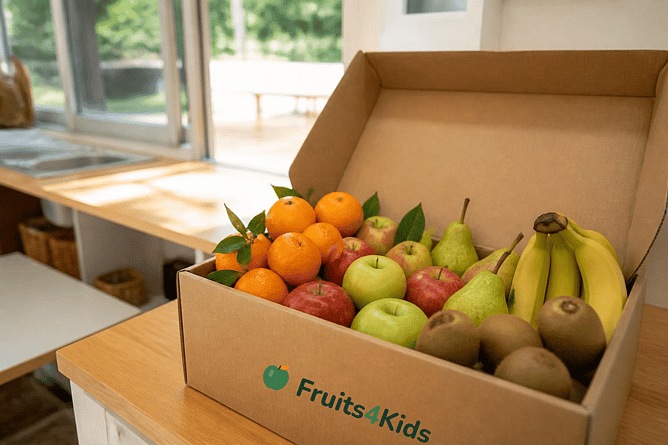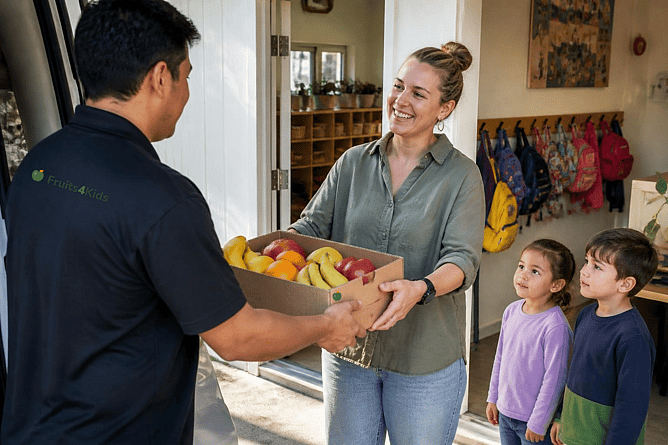
Under Te Whāriki, Wellbeing | Mana atua asks us to nurture children's physical health and fresh fruit is one of the simplest, most visible ways to do it. The challenge isn't the philosophy. It's the Tuesday afternoon when the bananas are black, the kiwifruit is rock-hard, and three children have announced they only eat watermelon. Here's what works.
Buy seasonal, buy better
Seasonal fruit can be cheaper, more plentiful, and full of flavour. A child who says they hate fruit may only have met fruit at the wrong time of year.
In spring, strawberries begin to arrive in volume. Summer brings stone fruit and berries. Autumn brings apples and pears, and through winter it's citrus at its best. A simple seasonal calendar pinned in the kitchen, one page, one line per season, takes five minutes to make and pays off all year. Match your orders to it and you'll spend less, waste less, and rotate variety almost automatically.
Encourage children to explore fruit
Resistance to fruit often isn't about taste. Texture, predictability, and choice can also play a part.
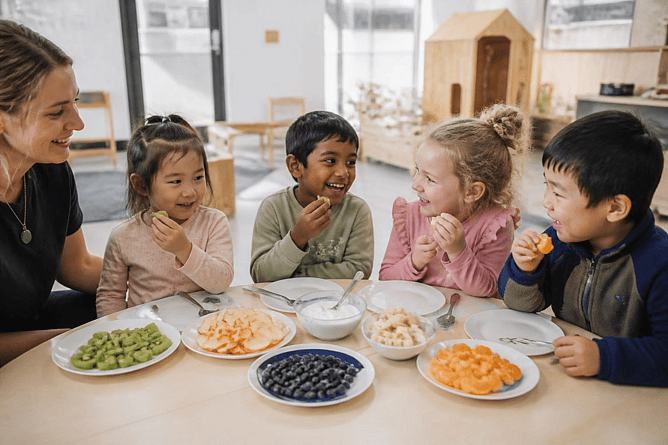
Cut it differently. "Star" cross-sections through a kiwifruit, thin rounds instead of wedges, apple shaved into ribbons with a peeler, presentation changes the experience. Add a dip: plain yoghurt turns fruit into something special. Give children two options and let them choose; a little choice can help children feel more comfortable trying something.
Another idea: make something with a face. Banana smile, finely chopped blueberries for eyes, strawberry nose. A playful face may encourage children to explore a fruit they would usually pass over. It is a simple idea worth keeping in the toolkit, without any pressure to eat.
Whatever the presentation, prepare fruit in line with the Ministry of Health guide Reducing food-related choking for babies and young children at early learning services. Follow the age-specific preparation advice, including for hard fruit and small round fruit. Children should sit upright and be supervised whenever they eat.
Fruit as a teaching resource
Fruit is one of the best, and cheapest, hands-on learning tools in a centre, linking directly to Exploration | Mana aotūroa.
Sorting and counting: line up six fruits by size, count the seeds in an apple versus an orange, graph which colour the group prefers. That's mathematics and science happening during preparation.
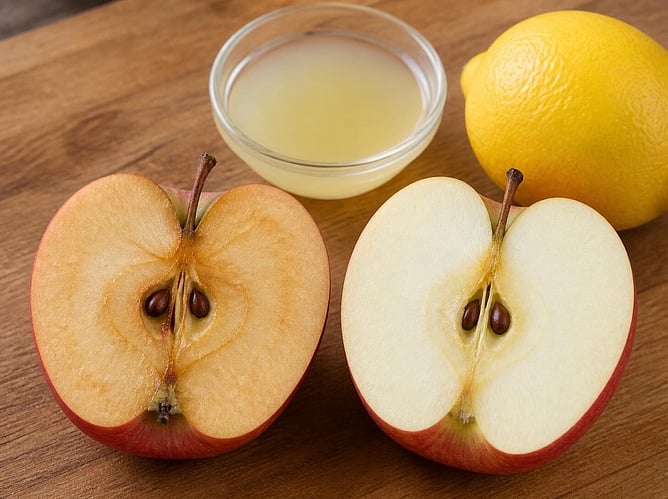
The apple experiment deserves its own moment. Cut an apple in half, leave one half exposed and squeeze lemon juice on the other. Within ten to fifteen minutes, the untreated half starts to brown. That's oxidation, the apple's cells reacting with oxygen in the air, and the acid in lemon juice slows it down. Children remember this.
Follow it with: what else could we try, vinegar? Water? Nothing? You've just run a controlled experiment. It's not a metaphor for learning; it is learning, right there on the cutting board. Keep the experiment fruit separate from food being served.
Taste tests with a simple sweet/sour chart add language and data literacy. These can be short activities using fruit already on the menu.
Cut the waste
A few storage habits can help cut waste. Keep bananas separate, they emit ethylene gas, which accelerates ripening in everything nearby. Apples and citrus last significantly longer refrigerated. Keep an "eat first" area in the appropriate storage space for fruit that needs using soon.
Bruised or very ripe fruit may still be useful if it is safe to eat. Blitz it into a smoothie with yoghurt, or fold it into a simple bake. Involving children in this step also reinforces the idea that food has value, a useful habit of mind.
Make it a rhythm, not a task
Centres can make fresh fruit easier to offer consistently by building a predictable routine. A set delivery or shopping day, fruit planned alongside the weekly menu, prep shared among kaiako so it doesn't fall on one person every time.
A rhythm removes the decision fatigue. When fresh fruit is part of the structure, not something that depends on who remembered to check the fridge, it is less likely to be overlooked.
Small, consistent habits are what turn fresh fruit from a good intention into a daily norm for tamariki. The individual steps aren't complicated. The goal is just making sure they happen.
About the Author
Written by the team at Fruits4Kids, an Auckland business that delivers fresh fruit boxes to early learning centres and schools. The team works with centres on getting fresh, seasonal fruit into children’s days, and sees first-hand what helps tamariki eat it.
Visit Fruits4Kids