What should a newly qualified early childhood teacher be passionate about, know, understand and be able to do when they walk into an ECE centre?
For Cavalli College, answering that question began with the early childhood education sector itself.
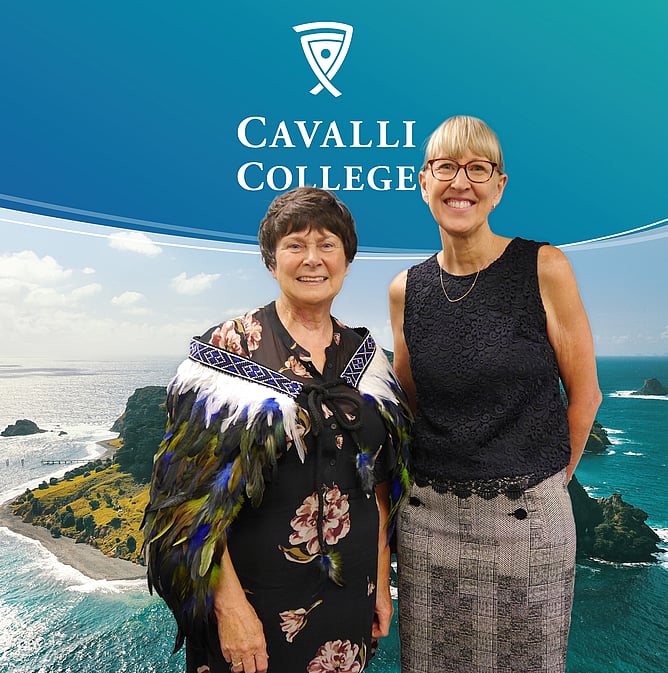
In recent years, Cavalli College Founding Director Selena Fox and fellow Director Glennie Oborn QSM heard a consistent message from centre owners, leaders and teachers: the sector wanted greater choice in initial teacher education, with programmes that reflected the professional and practical realities of teaching in ECE today.
Those conversations were the foundation of Cavalli College’s Bachelor of Teaching (Early Childhood Education) and Graduate Diploma in Teaching (Early Childhood Education).
Cavalli College has spent more than three years consulting widely with the ECE sector to shape the programmes. ECE teachers, leaders, associate teachers, mentors, employers, academics, cultural advisors and specialists have helped develop the new initial teacher education (ITE) programmes. Their contribution has influenced programme structure, curriculum, assessment, professional experience and learner support.
“Employers, teachers and leaders have been very clear about the knowledge, skills and dispositions they want to see in newly qualified teachers,” says Selena. “Our role has been to listen and translate that into new opportunities for teacher education that are relevant, practical and responsive. We value these relationships deeply, as their voices have informed every aspect of programme development and will continue to shape our programmes as ECE evolves.”
The programmes aim to connect academic learning with teaching practice, supported by opportunities for reflection and discussion.
Student teachers use teaching plans and reflective journals to engage in, apply and reflect on their learning, an important step to broadening assessment beyond reliance on traditional essays. Professional experience provides time in ECE settings, while face-to-face learning hubs and tutorials bring learners and lecturers together to learn, discuss practice and build professional relationships.
Sector input in practice
The impact of consultation can be seen throughout the programmes.
Michelle Pratt, Director of New Shoots Children’s Centres, contributed to programme development across intentional teaching, assessment, professional experience and learner support.
“For centres, it is important that beginning teachers arrive with more than theoretical knowledge. We need teachers who can apply that knowledge with children, whānau and teaching teams. I have valued seeing sector feedback translated into practical elements of the fresh approach that Cavalli programmes offer.”
Michelle’s input, alongside that of New Shoots professional leaders, contributed to practical assessments, strengthened teaching plans and clearer expectations for student teachers and teacher mentors.
Victoria Farquhar-Ayson, Regional Manager and Curriculum Manager, Kindercare Learning Centres, brought another employer and curriculum perspective, particularly around physical development, movement and early literacy.
“Teacher education needs to keep pace with current practice and the capabilities teachers need in centres. Being able to contribute directly to curriculum development gives employers an opportunity to bring that practical perspective and help strengthen how future teachers are prepared,” says Victoria.
Her input contributed to Cavalli College embedding the New Zealand-based Moving Smart Movement Matters course alongside its qualifications, enabling student teachers to graduate with an additional professional development certificate alongside their Cavalli College qualification.
Preparing teachers for practice
For Trish Thomas, ECE Programme Manager at Cavalli College, the connection between knowledge and practice is central.
“We want our student teachers to understand why they teach the way they do and have the confidence to put their knowledge into practice. Our focus is on developing intentional, reflective teachers who can take what they are learning and apply it meaningfully with children and whānau.”
The curriculum was developed with input from Pearl D'Silva and Shu-Yen Law to connect knowledge and practice in supporting young children to learn and thrive. It includes intentional and culturally responsive teaching, oral language and literacy, mathematics, science, the arts, movement, and insights from child development, neuroscience and the science of learning.
Lecturers, teacher mentors, pastoral support and regular face-to-face connection support learners throughout their study.
Continuing the partnership
The relationships that helped shape the programmes continue beyond their development. Cavalli's Advisory Group and sector partners remain involved through regular engagement, review and feedback, maintaining a strong connection between teacher education and practice.
For centre leaders, these examples highlight the value of clear expectations for student teachers and mentors, opportunities to connect study with everyday teaching, and regular feedback to training providers. Maintaining these relationships gives centres an ongoing role in shaping how future teachers are prepared for practice.