The pace and scale of change facing educators today is making continued professional learning more important – and more challenging – than ever.
Across early childhood education, educators are responding to increasingly diverse learner needs, rapid developments in artificial intelligence and digital technologies, changing expectations of leadership, and new understandings of literacy, inclusion, and wellbeing. At the same time, they are doing this in a profession where time is already at a premium.
If we expect educators to keep developing their practice, the way we provide professional learning needs to reflect that reality.
Professional learning needs to be built around professional practice – allowing teachers and educational leaders to investigate the issues they are encountering, apply new knowledge in their own settings, and build towards further qualifications at a pace that works for them.
Flexibility is central to this. For educators considering further study, it is worth looking at full-time or part-time options, online or on-campus learning, and coursework or research pathways. The important question is how the learning will support your practice while fitting around your work.
Postgraduate study doesn’t have to begin with a commitment to a master’s degree. A postgraduate certificate offers a shorter way to build knowledge and skills, while a postgraduate diploma allows for more advanced study.
Professional learning within a centre can also begin with one shared question from everyday practice. A team might explore whose voices are heard during group conversations, discuss a relevant reading, and agree on a small change to try. Returning to that question at a later team meeting creates space to reflect on what has changed and what still needs attention.
Professional learning also needs to be grounded in the communities we serve. For us, that means keeping our responsibilities under Te Tiriti o Waitangi front-of-mind, alongside kaupapa Māori, bicultural, Pacific and global perspectives. It also means working closely with schools, early childhood settings, and the wider education and community sectors so that professional learning and research respond to the realities educators and learners are experiencing.
Strong education systems also need a close relationship between research and practice.
One opportunity to connect research and practice is the annual Hui Rangahau Graham Nuthall Lecture and Research Symposium at Te Whare Wānanga o Waitaha | University of Canterbury (UC). The symposium brings educators and researchers together around questions that matter to the profession at an event held in honour of Professor Graham Nuthall, a pioneer in researching the relationships between students, teachers, and learning within the classroom.
This year’s symposium, on Tuesday 20 October 2026, will reflect Professor Nuthall’s legacy. Dr Hana O’Regan (Kāi Tahu, Pākehā) and Associate Professor Frauke Meyer will present on Hāpaitia te Ngākau Aroha – Elevate Empathy, an anti-bias professional learning programme for educators (University of Canterbury, 2026).
Drawing on research into high-expectation practices, the programme uses virtual reality to immerse educators in the experience of a Māori student over the course of a school day, with the aim of making visible the subtle and cumulative effects bias can have in everyday interactions (University of Canterbury, 2026). For ECE teams, this raises a useful question: how might our expectations shape the ways we respond to different children?
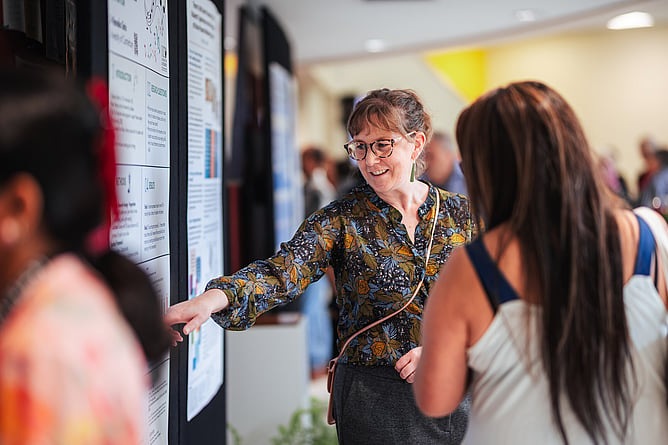
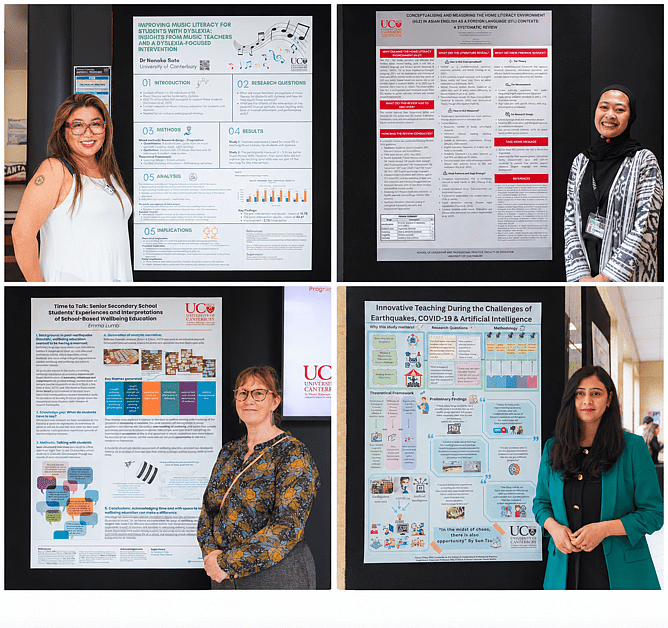
The event is free to attend, and the lecture will be livestreamed. For those who attend the event in person, the symposium also offers quick-fire presentations, research posters, and time for networking and knowledge sharing.
My commitment is to professional learning that is relevant, research-informed, and connected to practice, while recognising that educators are busy people. Having flexible ways to begin, build on what you have already learned, and choose how far you want to take your study can help make lifelong professional learning genuinely achievable.
Professor Joce Nuttall is Amo Matua, Ako | Executive Dean of Education in Te Kaupeka Ako | Faculty of Education at Te Whare Wānanga o Waitaha | University of Canterbury.