By Del Costello
Director of Coactive Education
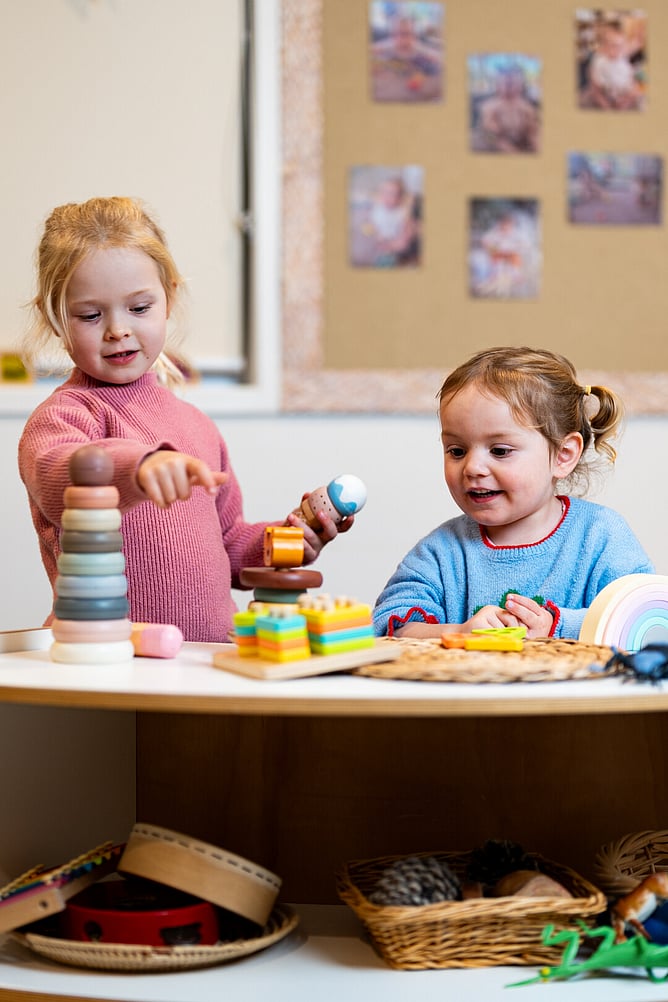
A child tells you that the puddle outside is an ocean. Another adds that a taniwha lives beneath it. Before long, three children are building a boat, negotiating who will steer and deciding where the taniwha sleeps.
Story is already doing the work of language, imagination, relationship and learning.
So what happens when we stop treating moments like these as incidental and deliberately place story at the heart of pedagogy?
Story helps children learn about themselves, others and the world around them. It supports belonging, language, identity, memory and connection. But when storytelling becomes more than an occasional activity, it can also transform the way kaiako think about curriculum, relationships, assessment and everyday practice.
Here are four key ideas for considering what story-centred pedagogy can look like.
Storytelling is developmental infrastructure
Story is one of the structures through which young children organise experience, build language, form relationships and make sense of the world.
Its influence extends well beyond the enjoyment of hearing a good book. Stories bring together language, memory, attention, emotion, identity, relationships and knowledge. They give children a structure for understanding experiences and revisiting ideas over time.
Research suggests that rich narrative experiences can support language and literacy development, executive function, recall and social-emotional learning. Stories can also help children understand sequence, cause and consequence, while giving meaning to new vocabulary and concepts.
A familiar story can become a shared reference point throughout the day. Children might revisit characters during dramatic play, draw maps of where the story happened, negotiate alternative endings, retell it through movement, or connect it to something that has happened in their own lives.
Storytelling is also deeply relational.
When kaiako and children retell, question, predict, imagine and reshape stories together, meaning is constructed through responsive and reciprocal interaction. The more stories children hear, explore and create, the more language and narrative patterns they have available when they tell their own stories and recount personal experiences.
Storytelling, then, is not simply an optional curriculum enhancement. It is part of the developmental infrastructure through which children communicate, connect, make meaning and understand where they belong.
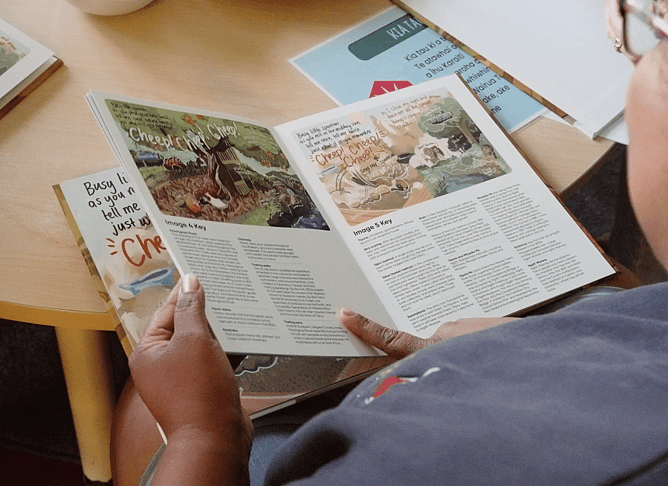
Children must be authors, not only audiences
One of the most important shifts in story-centred pedagogy is moving from performative storytelling to collaborative storytelling.
Instead of:
“I am presenting the story to you.”
The stance becomes:
“We are building the story together.”
Relational pedagogy is shaped through participation, responsiveness and shared meaning-making rather than simply through delivery.
This raises an important question for kaiako:
How much storytelling is being done by the adult, and how much narrative authority is being given to the child?
Children can tell personal and family stories, retell books, dictate stories to an adult, narrate their play, revisit photographs and Learning Stories, or create stories in te reo Māori and home languages.
They can question stories, change them, dramatise them, disagree with them and imagine different possibilities.
These opportunities position children as contributors rather than simply recipients. They learn that their experiences carry meaning, their voices have value and they can shape the stories of their learning community.
When children are given genuine narrative authority, storytelling becomes something done with them rather than for them.
Local stories strengthen belonging
Children should have opportunities to know the stories beneath their feet.
Whose whenua are they learning on? What histories are carried by local places? Who has shaped the community around them? What stories are held within the local landscape, waterways, plants, animals and significant places?
Walking and storying the land can create opportunities for children to connect with the cultural and natural narratives around them while also making links to their own home whenua, cultures and family histories.
Belonging grows when culture is woven through everyday practice rather than being confined to language weeks or cultural celebrations.
Te reo Māori and home languages can become part of everyday storytelling. Cultural artefacts and artworks can provoke questions and conversation. Photographs, local maps and oral histories can help children understand that the places around them carry histories and meaning.
Where stories involve mana whenua histories and mātauranga Māori, relationships matter. These stories should be explored alongside local knowledge holders, rather than treated as curriculum content to be collected and retold without context.
One useful lens is He Awa Whiria, the braided-rivers approach associated with Professor Angus Macfarlane and colleagues. It reminds us that different knowledge systems do not need to be collapsed into one another. Mātauranga Māori and Western knowledge can retain their integrity while contributing alongside one another.
A teaching team might inquire into the stories of their whenua, connect with local people, walk significant places with children, explore local flora and fauna, and examine how the environment has changed over time.
In this way, story becomes more than content.
It becomes a way of helping children locate themselves within a place, a history and a community.
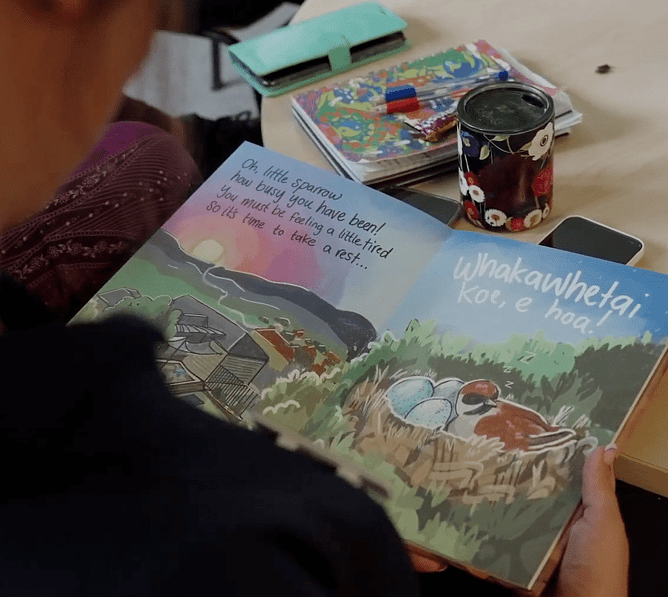
Story-centred pedagogy requires systems
Story-centred pedagogy is not achieved by adding more storytelling activities to an already crowded programme.
It requires alignment between what a service believes about children, what kaiako do, what leaders prioritise and what organisational systems reinforce.
Professional learning might begin with developing a shared understanding of storytelling as pedagogy. Teaching teams might inquire into the stories of their whenua, consider how narrative connects with Te Whāriki and Kōwhiti Whakapae, and examine the relationship between story, documentation, assessment and intentional teaching.
Over time, teams can develop a shared understanding of what story-centred practice actually looks, sounds and feels like.
Implementation is not always straightforward.
Kaiako may have different levels of confidence with storytelling. Story may initially be perceived as another task to fit into the day. Busy periods can make it harder to sustain new practices. Teams may need to develop shared language, while also finding the balance between spontaneous storytelling and deliberate teaching.
This is where leadership and organisational systems matter.
Leaders might ask:
If we say story matters here, where would I see that belief reflected in our systems?
It may be visible in meeting agendas, planning templates, professional growth, induction, Learning Story expectations, whānau engagement, internal evaluation, environment design or even decisions about which resources are purchased.
When these systems align, story becomes part of the way the learning community works rather than another initiative to maintain.
What might this look like tomorrow?
A useful starting point is not necessarily to introduce more activities, but to ask better questions:
● Whose stories are heard most often in our setting?
● How often do children change, challenge or create the stories we explore?
● What stories live in the whenua and community around us?
● Where is story visible in our planning, assessment and professional conversations?
These questions can open rich conversations within teaching teams and help shift storytelling from something we occasionally do towards a way of thinking about pedagogy.
When story becomes the heart of pedagogy, children are no longer simply recipients of curriculum. They become authors, interpreters and contributors.
Their experiences matter. Their languages matter. Their connections to people and place matter.
Perhaps that is the real power of story: it does not simply help children understand the world.
It helps them understand that they have a place within it and a voice in shaping it.
About the Author
Coactive Education works alongside early childhood services and schools to strengthen learning through language, identity and connection, including Express Oral Language, which supports educators to understand and respond to children’s oral language development, and Telling Your Stories, which brings local people, places and stories into everyday learning. Together, these approaches reflect Coactive’s commitment to helping children find their voice, know where they belong, and experience learning that is grounded in meaningful relationships and stories. www.coactiveeducation.com