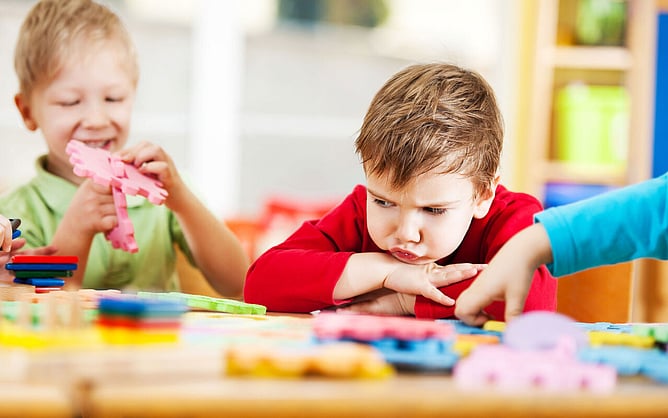
Toddlers are known for their tantrums. Parents often talk about the challenges of the "terrible twos," "frightful fours," and "sassy sixes." This topic is widely discussed, yet most parents are still not sure what they are supposed to do when their child drops to the ground in a grocery store, demanding to meet Batman.
Toddlers don't come with instruction manuals, and there certainly isn't a one-size-fits-all solution for tantrums. However, a few general guidelines can help reduce stress and tears for everyone involved, including adults.
After years of working in a preschool centre, I've seen tantrums over broken crackers, the wrong-coloured cup, a missing sticker, and, once, because a child couldn’t catch a bubble in their mouth before it popped. While every child is different, the mistakes adults make during tantrums are often surprisingly similar.
1. Expecting a Toddler to Be Rational During a Tantrum
Have you ever tried telling a grown adult to ‘calm down’ when they were tired, frustrated, or emotionally heightened? How did that go?
Exactly!
Just as it would be difficult for an upset adult to immediately calm down and think rationally, expecting the same from a young child, who is still learning to understand their emotions, is often unrealistic.
Most temper tantrums happen because children are either feeling too many emotions at once or because a single emotion is Hulk-level strong. When anyone is that emotionally heightened, explanations and negotiations usually just add fuel to the fire.
The best thing you can do for your child and yourself is to avoid turning the moment into a fight. You need to show them that it's you both vs emotions, not you vs them.
2. Matching the Child's Emotional Intensity
Let’s be fair, no one likes dealing with tantrums. Especially not after a long and tiring day of spreadsheets and paperwork. Or sometimes even before you've had your morning coffee.
It is very easy to lose your temper and shout while dealing with these unexpected or sometimes unnecessary situations.
When I first started working with children, I used to feel guilty whenever I became frustrated. Over time, I realised those feelings were surprisingly common, and contrary to popular belief, very human. It does not make you a bad parent or heartless grown-up.
Whenever I found myself starting to feel overwhelmed, I would close my eyes and remind myself that the innocent child in front of me needed help and that, in that moment, they were looking to me for it.
If possible, I would just sit beside them and repeat, “I’m right here,” or “You are safe.” Believe me, the hardest part of the entire situation was keeping my voice calm. But the softer my voice, the quicker the moment passed.
No one wins if you both lose control of your emotions. Is it easy? No.
Is it impossible? Also no.
And no one ever said parenthood was easier than Mission Impossible.

3. Giving In to Stop the Tantrum
If I can convince you to avoid one mistake in this entire article, it’s this one. No matter how tempting or reasonable giving in feels, it is often setting you up for future failure.
By giving in, you are unconsciously teaching your child that if they start crying, you will buy them the entire collection of Pokémon cards. Children learn quickly, so don't be surprised if they try the same strategy again in the future.
So, pick your poison: either walk them through this particular emotional situation or be prepared for 100 more to come.
From what I have seen, many of these tantrums can be avoided by creating predictability. If you are taking your child grocery shopping, set clear boundaries, explain those boundaries clearly to your child and, most importantly, stick to them.
But sometimes, all this preparation doesn’t work when your child sees an ice-cream stand in the middle of nowhere. I understand how embarrassing it is to see your child on the ground, screaming at the top of their lungs. It feels as if every eye is judging you, and it would all be over if you just said ‘yes’.
However, those adults either have children and completely understand what you are doing or don’t have children and therefore have no standing to pass judgement (their time will probably come soon).
4. Ignoring the Underlying Cause
Tantrums happen to almost every child, not because tantrums are their default setting, but because there is often something that triggers these little humans. As someone who has years of experience working with children, even I can’t wave a magic wand and stop them.
Instead of tiptoeing around the tantrums, it might be more helpful to understand what triggers your child and how you can work around it.
Common reasons behind these loud and heavy moments can be as primal as tiredness, hunger, or heat, or something more complex, such as feeling scared, wronged, or misunderstood.
We can’t forget that these little humans don’t have a lot of experience being human and therefore don’t usually understand why they shouldn’t play football in the middle of the road or wave around a knife like a sword. And it is hard to remember all these rules when a developing brain just wants to watch Nee-Naw on repeat while eating frozen blueberries at 3 a.m.
I have discovered that the simplest approach is to ask them directly. Once the emotional moment has passed and the child has stopped crying, yelling, or trying to rearrange the furniture, I would ask them to tell me what they had been feeling and try to understand their reasoning, no matter how unexpected it sounded.
Sometimes you will find the actual cause, and other times you will end up being more confused than you were before. Both are progress. The key is not to make the child feel wrong or stupid. If you accomplish just that, you have succeeded.
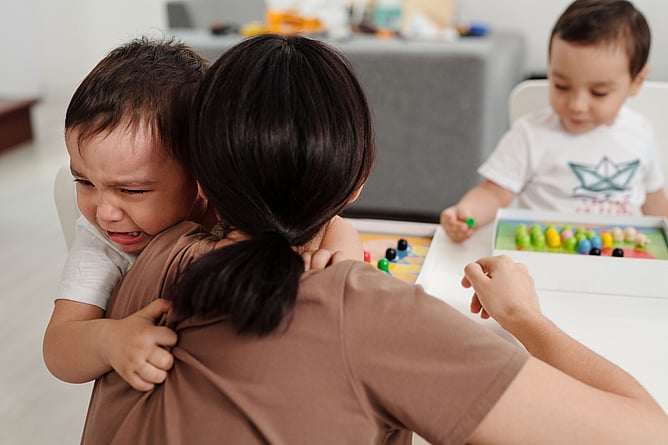
5. Blaming Yourself for Every Tantrum
One thing I have noticed over the years is that many parents believe their child's tantrums mean they have somehow failed at parenting.
I cannot explain in words how far from the truth that statement is. Most of the time, a child throws tantrums around people they feel secure with. So, if your child is demanding purple strawberries while you are running late for work, congratulations: they love you and feel safe around you. Pat yourself on the back.
Tantrums are often an emotional traffic jam inside a very small human, and it takes years to master the art of emotional management and regulation.
What I came to understand is that tantrums are often forms of communication rather than acts of defiance. Children don’t yet have the words or patience to explain what is upsetting them, and throwing their bodies on the ground may be the easiest way they know to get a grown-up's attention and release some pent-up energy.
I think that, most of the time, the hardest part is accepting that even if you did everything right, most children don’t have tantrum-free childhoods. Tantrums are a part of growing up.
So, stop blaming yourself!
The mere fact that you have read this article this far means that you want to understand your child, and that dedication alone tells me you're already doing a better job than you think (yes, even if it doesn’t feel that way most of the time).
You Both vs Emotions
Tantrums are exhausting!
Yes, but they are also a common part of a child’s social-emotional development journey.
There is no official toddler-tantrum antidote that lets you skip this part of their childhood, but by stopping attempts to reason during a tantrum, avoiding matching a child's emotional intensity, avoiding giving in to demands, paying attention to triggers and, most importantly, letting go of the guilt, you can walk your child through this hard journey.
The goal is not to make all tantrums disappear but to reduce their frequency and intensity. With your constant support, patience, and guidance, your child will gradually develop the skills to understand, communicate, and regulate these emotions without crying or yelling in a park because the sun is too yellow.

About the Author
Rose is an Early Childhood Educator based in New Zealand, with a passion for child development and the incredible learning that takes place during the early years. Having worked with infants, toddlers, and preschool-aged children, she enjoys sharing practical insights inspired by everyday experiences in the classroom.
Through storytelling, real-life observations, and evidence-informed practice, Rose writes about play, behaviour, curiosity, creativity, and the many ways young children make sense of the world. Her goal is to help parents and educators better understand and support children's learning while celebrating the wonder of childhood.