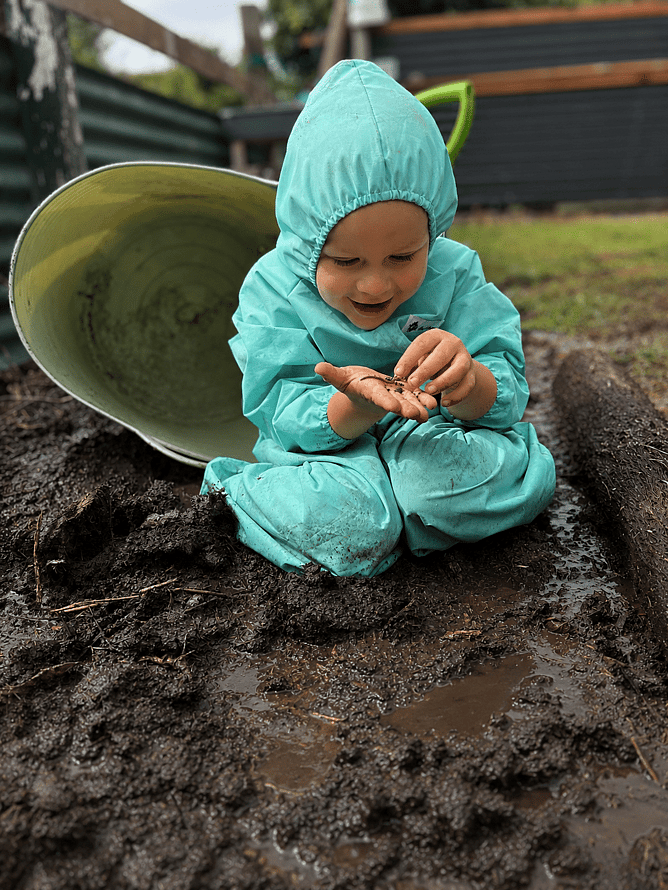
There is a well-known phrase in early childhood education: children learn through play. But there is one type of play that still makes some adults hesitate: muddy play.
Most kaiako instinctively know it is good for tamariki. The harder part is sometimes articulating why, especially to parents who were not expecting to collect a child covered in mud at pick-up time.
Here is some of the research worth having in your back pocket.
What the Science Says
Soil contains a diverse range of microorganisms, and regular exposure to them in early childhood appears to support immune system development.
There is also growing research into a naturally occurring soil bacterium called Mycobacterium vaccae. Early studies suggest exposure may influence serotonin production and support emotional wellbeing, although researchers are still exploring exactly how this works. It is another reminder that time outdoors can benefit children's wellbeing in many ways.
Beyond biology, research has linked unstructured outdoor play in natural environments with improved attention and reduced stress. For tamariki who arrive at the centre already wound up, time outside digging and exploring can shift the whole tone of a session.
More Than Just Mess
Muddy play supports multiple areas of learning at the same time. As children scoop, pour, squeeze and shape mud, they develop fine motor skills that later support writing.
Give a child a mud kitchen and they are running restaurants, brewing potions and inventing entire worlds. That kind of open-ended play is where imagination grows.
Tamariki often come back inside noticeably calmer after time outdoors. Navigating slippery surfaces, recovering from falls and dealing with the occasional failed mud pie build resilience and confidence.
Simple Ways to Bring Mud Play into Your Programme
Mud kitchen: An outdoor kitchen with old pots, spoons and containers gives children a familiar setting for open-ended play. Add water, leaves and stones, then let them experiment.
Digging patch: A designated digging area gives children permission to really get into the ground. It is useful for investigating worms, planting or simply enjoying the satisfaction of digging a very big hole.
Mud painting: Mix mud to different consistencies and use it as paint on large sheets of paper, rocks or a fence. It dries in interesting ways, and the textures fascinate tamariki.
Mud balls and sculpting: Rolling mud into balls, building walls and making shapes can become quiet, focused play that holds a child's attention for a surprisingly long time.
The Practical Reality
The barrier most centres face is not philosophical. It is logistical: wet clothes going home, parents who were not expecting it, cleaning up at the end of a session and cold weather that makes everyone less enthusiastic about getting outside in the first place.
More and more centres are addressing this with dedicated wet-weather gear that goes on at the start of outdoor time and comes off before tamariki head inside. It reduces the washing burden for families and makes spontaneous outdoor play much easier to say yes to.
Dedicated wet-weather overpants can make regular bush sessions and muddy play easier to manage, particularly through winter.
Muddy play is much more than mess. With clear communication and the right practical setup, kaiako can confidently explain its value to families and make it a regular part of outdoor learning.
About the Author
Alana Steyn is a Hawke's Bay mum and the founder of Mud Mates. For more than 15 years, Mud Mates has been making New Zealand-made wet-weather gear, fitted tablecloths, mud kitchens and outdoor play accessories for families and ECE centres.
Visit Mud Mates or explore the blog