The resources children encounter in an early learning environment help shape what they understand about themselves and the world around them. Books, images, language materials and digital content can signal whose cultures, families and experiences are recognised and valued.
For educators, choosing culturally responsive resources is not simply about adding more variety to the shelf. The strongest resources connect with the children and whānau in a service, support meaningful teaching practice, and create opportunities for children to contribute their own knowledge.
What should educators look for?
A useful starting point is to consider whether children can genuinely see and hear themselves in the material. This may include familiar languages, names, family structures, cultural practices and everyday experiences. Representation should feel purposeful rather than decorative.
Educators should also consider who created the resource and whether its language and cultural content are authentic. A resource can provide a starting point, but it should not replace relationships with whānau or local cultural knowledge. Families should have opportunities to share their own words, stories, perspectives and aspirations.
Age suitability matters too. A resource designed for older children may need to be adapted before it is useful in an early learning setting. Educators can ask whether the language, images and activities are accessible, whether they invite participation, and whether they can be used flexibly rather than followed as a fixed programme.
Bringing resources into everyday practice
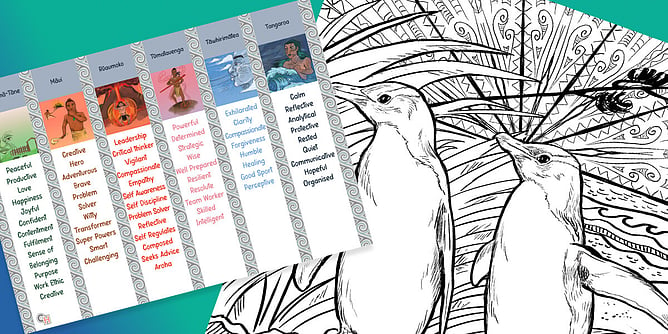
Digital and printable resources are most valuable when they support real interactions. An ebook or audiobook might prompt children to talk about a familiar experience. A poster or provocation card could support a conversation about emotions, identity or belonging. First-word cards may help introduce or reinforce language already shared by children and whānau.
Pasifika language resources can also support learning during Pacific Language Weeks. However, meaningful cultural inclusion should continue beyond a single celebration. Educators can revisit stories, words and concepts throughout the year and connect them with the people, languages and experiences represented in their own community.
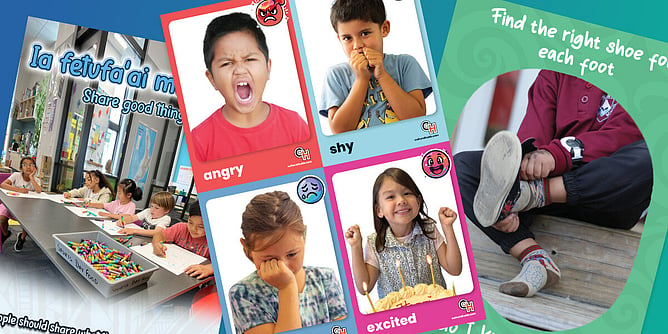
Resources focused on emotional literacy and wellbeing may help children recognise feelings, communicate what they need and explore how others might be feeling. Neurodiversity resources may also give educators another way to support conversations about different ways of thinking, communicating and participating.
The resource itself is only one part of the learning. Its value comes from how educators introduce it, respond to children’s ideas, and connect it with relationships and experiences already present in the service.
Connecting with families
Resources that can be accessed both at the centre and at home may help create continuity for children. A story introduced during the day could be shared again with whānau, while an audio or printable resource may give families another way to engage with current learning.
Before sharing digital materials, services should consider whether they are accessible to families and whether participation is genuinely optional. It is also useful to explain why a resource has been selected and invite feedback about whether it reflects the family’s language, culture and experiences accurately.
Exploring a new resource platform
Learn Li is a recently launched New Zealand-built platform developed by Cultural Hubb, which has worked alongside schools, ECE centres, educators and families for more than 10 years.
The platform brings together ebooks, audiobooks, printable resources, posters, provocation cards and materials focused on te ao Māori, Pasifika cultures, sustainability, literacy, mathematics, wellbeing, emotional learning, neurodiversity, independence and school readiness.
Services considering the platform—or any similar collection—should review the age suitability, cultural relevance and practical usefulness of individual resources. They should also consider how the materials would fit within their existing programme, whether they are accessible to families, and what the ongoing subscription costs and conditions are.
No single platform can provide everything a service needs for culturally responsive practice. Digital resources are most useful when they sit alongside thoughtful teaching, local knowledge and genuine partnerships with whānau.
The key question is not simply how many resources are available, but whether they help children feel recognised, supported and able to participate in ways that are meaningful to them.
Abel Tutagalevao is a children’s author, publisher and owner of Cultural Hubb. Drawing on his Samoan heritage and experience in education, he creates culturally responsive resources through Cultural Hubb and Learn Li that help children see their identities, languages and experiences reflected in their learning.