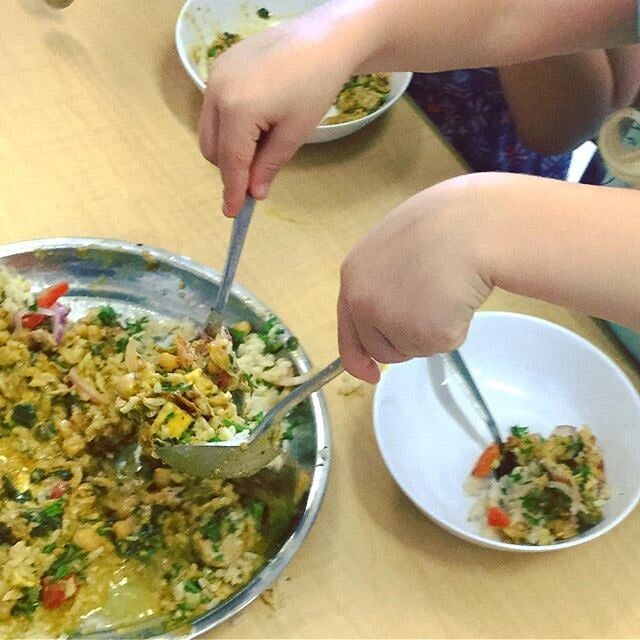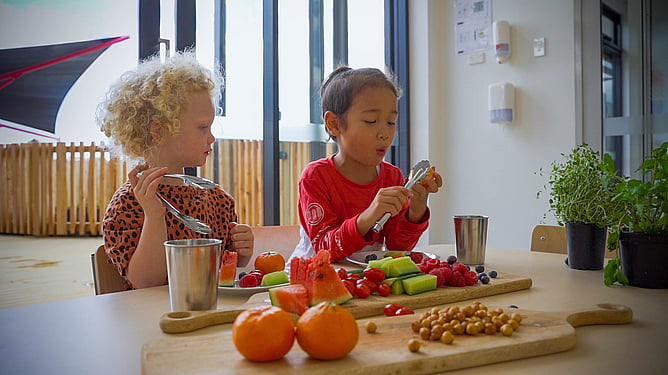
There is a point in every early learning setting where everything we say we value about food becomes visible.
It does not sit in the menu, a policy, or a training session. It reveals itself at the table, when the food is placed down and children begin to engage. If you watch closely, this moment tells you almost everything about how the mealtime is working.
The children are seated, and the rhythm of the routine, often held as a ritual, is complete. A sharing platter is placed within reach. Some children reach in immediately, familiar with what comes next. Others pause and watch, taking a little longer before choosing whether to engage.
Nothing has been said yet, but something is already being communicated.
Where intention becomes visible
In most services, a great deal of care goes into what is offered. Meals are planned thoughtfully, ingredients are chosen with intention, and there is growing awareness of balance, variety, and the role food plays in supporting children’s wellbeing. This is visible across the sector and is often practised well.
What is considered less often is how consistently that intention is carried into the mealtime itself.
Licensing expectations are clear: food must be safe, food must support children’s health, and mealtimes must be calm, supervised, and predictable. Most services understand these expectations. Where things become more complex is in how they are upheld under real conditions, across different rooms, between educators and the kitchen, and through the leadership decisions that shape how these moments are managed each day.
Children do not experience these elements separately. They experience what is offered, how it is offered, and how the environment feels as one continuous moment. The kitchen is not separate from that moment either. What is planned, prepared, and passed forward shapes what is possible at the table just as much as what happens in the room.
When the system is aligned
When these elements are aligned, mealtimes tend to hold without much effort. Food arrives in a way that is easy to recognise. There is something familiar to begin with. Adults sit alongside the children rather than managing the meal, and its pace allows children to engage in their own rhythm.
The system is doing the work.
When that alignment is less clear, the shift is often small but noticeable. The day tightens, transitions feel more hurried, and the separate components of the meal are combined. An adult leans in, gently and kindly, to offer support. Someone notices that a child has not eaten and steps in to help.
The intention is always care, but this is usually the point at which something begins to change.
Children do not respond to the food first. They respond to how it arrives. When the system is clear, the meal carries itself. When it is not, the adults begin carrying it.
You can feel it when this happens. More is said, more is interpreted, and the moment becomes more closely managed. Food becomes something children are expected to respond to, rather than something they can meet in their own time.
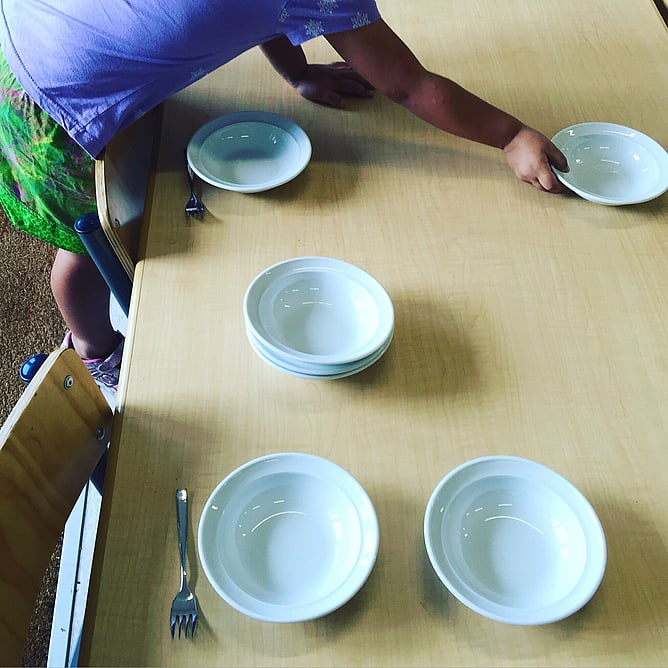
The role of leadership
For leaders, this is the point of focus, because leadership holds the alignment between the kitchen, the educators, and the expectations at the table.
When mealtimes feel inconsistent, the instinct may be to adjust the menu or reconsider what is being offered. In many cases, however, the more useful starting point is not the food. It is the system around it: how food is designed and presented, and how the moment is held at the table.
A few points of clarity can make the biggest difference:
Children remain at the table for the duration of the meal, allowing them time to settle and engage in their own way.
Food is placed within reach and offered clearly, often on shared platters with child-friendly tongs, so children can serve themselves when they are ready.
Adults sit alongside children, maintaining a supportive presence rather than stepping in to influence what is eaten.
Meals include something familiar, giving children a clear place to begin, shaped by what is planned and prepared in the kitchen.
The same expectations are held across the team, supported by shared language, so children experience consistency from day to day.
Communication with families forms part of the system, often through learning stories from the meal table. This allows the experience of food to extend beyond the centre, building confidence at home and strengthening local food culture and capacity.
These are not large changes, but they can quickly shift the feel of the meal.
Creating the conditions for engagement
Eating develops over time. It cannot be rushed, managed, or completed within a single meal. It is shaped by repetition, familiarity, and the sense that the table is a place where nothing is required and everything is available.
When these conditions are in place, children begin to engage with greater confidence, not because they are encouraged to, but because the system supports them to do so.
For services, this is where licensing expectations become visible: not only in the documentation, but in how consistently the experience holds.
Mealtimes do not hold themselves together. They are held by the systems, expectations, and shared understanding surrounding them, from the kitchen, through the room, and across the whole centre.
The first step is not changing the food. It is making that shared understanding visible.