In New Zealand there are many blind low vision children who experience difficulty transitioning into and out of ECEs. There is also lack of training or professional development for teachers in relation to managing such children. This leads to a poor start to their education and often flows through to primary school and beyond.
What is vision loss: some interesting facts
Vision impairment can range from blindness or very low vision to an inability to see particular colours.
Children might be born with vision impairment, or it might happen later in childhood.
The way children behave or use their eyes might tell you that they have a vision impairment.
Early intervention can make a significant different for children with vision impairment.
The 12 most common vision problems in children are: Myopia (short-sighted), hyperopia (long-sighted), amblyopia (lazy eye), convergence insufficiency (both eyes struggle to focus together), depth perception and 3D vision difficulties, double vision, eye fatigue and eye streaming (watery eyes).
Vision impairment, low vision and blindness
Vision impairment can happen at any age. Some conditions might result in vision problems for only a short time, but most vision conditions in children stay the same throughout life. Other conditions may get worse over time, resulting in poorer vision or blindness as children get older.
Low vision is when a person can’t see all the things they should be able to see for their age. This includes low-to-no vision, blurred vision, loss of side vision, or they might not be able to see some colours (i.e. colour blindness).
A child is considered legally blind if:
They can’t see at 6m what a child with typical vision can see at 60m.
Their field of vision is less than 20 degrees in diameter (a person with typical vision can see 180 degrees).
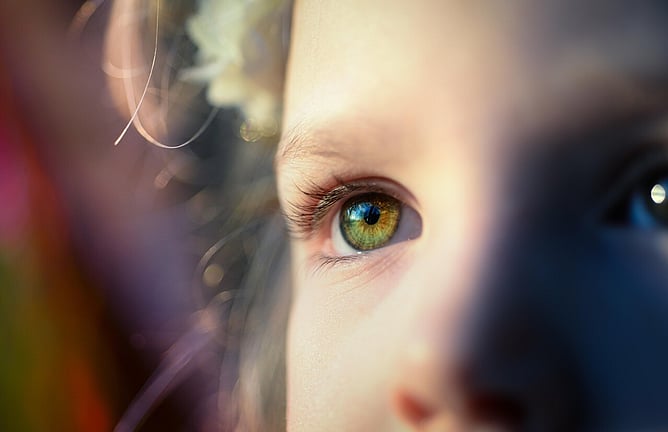
Early signs and symptoms of vision impairment
Children with vision impairment might have typical-looking eyes, so you may need to notice certain behaviour or the way they use their eyes. Watch out for children that:
Hold things up close to their face.
Say they’re tired or rub their eyes a lot.
Turn or tilt their head or cover one eye when looking at things up close.
Get tired after looking at things closely (e.g. reading, drawing or playing handheld games).
Seem to have crossed or turned eyes or a squint.
Appear clumsy (e.g. they might knock things over or trip often).
Need for support
Children with vision impairment experience a range of challenges, many that stem from a lack of understanding and empathy from others. There is also significant lack of budget available, which leaves parents having to compete for resources for their blind low vison child. ECE centres often have to manage working with blind low vision children with very little support, which is exacerbated by the lack of teacher training in this area.
Blind low vision children are good at hiding feelings and may come across as managing even if they are not. ECE centres are uniquely positioned to support blind low vision children on their education journey, but this needs to start with a good understanding of vision loss. In some cases, small improvements can make a big difference:
Resources in larger font size or alternative formats (i.e. audio).
Use of clear directional language, rather than using visual cues or assuming that the child understand what they cannot actually see.
Easy and clear access paths, so they can confidently navigate their space; provide physical guidance if requested.
Minimise changing of furniture arrangement.
Use of specialist technology, including Braille.
Provide sensory exploration of textures, sounds and smells.
Promote social interaction so that they can build confidence (a buddy system can be helpful).
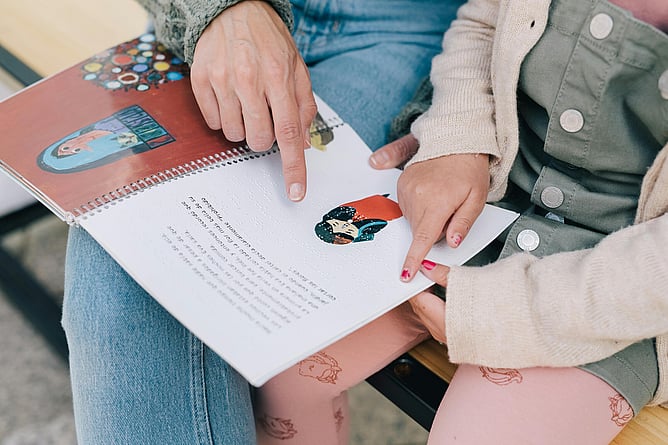
Support in action
Awareness is key, but teachers need to take positive action to assist the child, and the first step is to discuss with parents who can provide valuable information. Having a framework or agreed plan to work by is helpful as it will allow you to have some control over your situation and plan for what your needs and requirements are. The following process can be used as a guide:
Meet with the parents to learn more about the child and any of their concerns.
Discuss the need or pressing issues affecting the child whilst in ECE.
Consider how parents might be able to assist or suggest solutions.
Determine whether there is public funding available for the child.
Regularly follow up with parents using progress reports.
Manage and record ongoing issues using the agreed plan (reporting is key).
The knowledge and beliefs held by leaders and teachers, combined with the culture they promote, have a fundamental influence on how welcomed and valued blind low vision children and their parents feel in ECE settings. This includes setting clear expectations for equity and inclusion (which is reflected in policy), prioritising children’s success when making plans for the service and using information effectively to inform good practice.
Quality, intentional teaching plays a critical role in creating equity in engagement, progress and achievement for blind low vision children. The following elements are important when considering quality:
A responsive curriculum which involves both planned and spontaneous learning experiences and adapts in response to children’s strengths, interests, needs and identity.
Drawing on up-to-date knowledge of how children learn and develop, and how to bring this to life through teaching practice.
Using assessment information and a wide range of teaching strategies to respond effectively to the different ways in which children learn and identify next steps.
Having sufficient staffing to allow for appropriate teacher:child ratios and additional support when required.
Change is required for blind low vision children to achieve positive educational outcomes, but also for teachers to avoid burnout and access better supported. We cannot allow blind low vision children to be excluded or unsupported because of their vison loss.
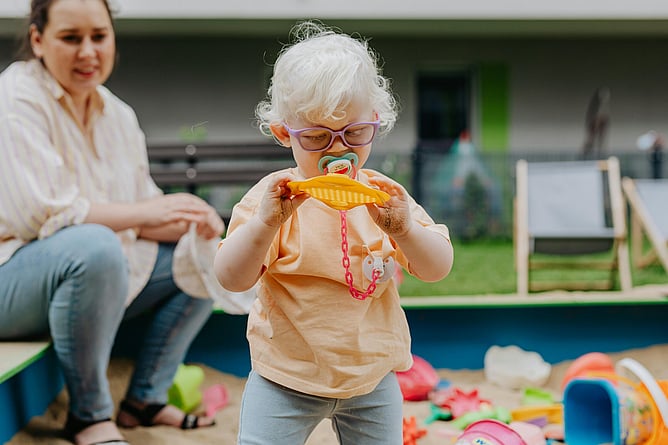
About the Author
Margaret Gilbert is an advocate for blind low vision children, having low vision herself and a deep first-hand understanding of the challenges this creates. Margaret is involved with Blind Low Vision NZ and has authored numerous books in her respective expertise of procurement and contracts. Margaret can be contacted at margaretgilbert2020@gmail.com.